Welcome to soft Haven

Going Deeper With Sacral Energy
On creativity, warmth, and the rooms that wake us up
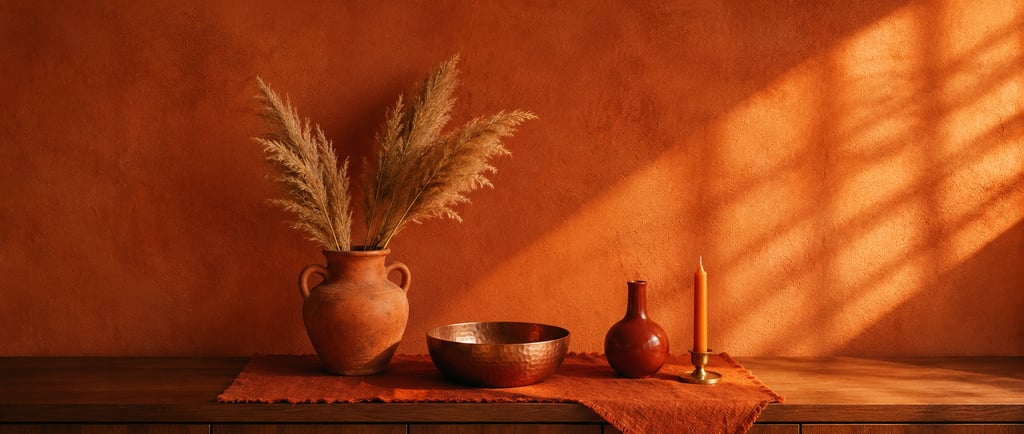
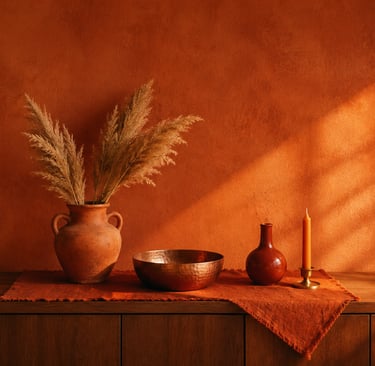
It's late afternoon, and the kind of light that turns a wall into something more than a wall is spilling in.
You walk in and the warmth touches your arm before the eyes can name it. The amber candle you lit an hour ago is still wafting through the room. You're finally back in the one space of the house where you feel most alive.
This is what Sacral ignites in us. The parts that want to feel a little more alive. A little more creative. A little more free.
It is the felt sense of color, texture, and small sensory pleasure. The instinct to reach for the rust pillow instead of the grey one and not need a reason.
A room shaped by Sacral energy doesn't try to soothe you. It tries to meet you where you are.
The feeling behind the room
A Sacral room is somewhere your body wakes up without being startled.
Warm saturated colors — rust, terracotta, amber — gently activate the limbic system, the part of the brain that processes emotion, curiosity, and creative impulse. They do this without engaging the amygdala's threat response, which is what would happen with high-contrast or jarring colors. The result is engagement without alarm. Dopamine rises gently, which doesn't just produce pleasure — it produces motivation toward action. The body becomes available, and then something inside starts reaching.
You'll feel this as the small pull towards finsihing the half-written song. Or the urge to write down the idea you've been carrying around. Or the impulse to finally fix the lamp that's been on the dresser for three weeks. A Sacral room doesn't make you do these things. It just turns the volume up on the parts of you that already wanted to.
If the room could speak, it wouldn't say "feel inspired." It would say "come closer."
The materials that carry this energy
Sacral energy lives in materials that hold warmth, color, and a little drama — but the materials don't have to be precious. Most of them are quietly affordable.
Terracotta in its deeper expressions- rust, burnt sienna, fired clay. A small terracotta pot from the garden center on a windowsill is doing the same work as the $200 hand-thrown vessel. The color does most of it.
Copper and aged brass introduce a metal that holds light differently than steel. They warm what they reflect. A thrifted brass candlestick or a small copper bowl from a flea market catches afternoon light and gives it back to the room as something golden.
Pampas, dried palm, and grasses with movement bring vertical energy and visible texture. Faux is fine. Real lasts a season and looks better the longer it sits. Even a single tall stem in a vessel on the floor changes the whole corner.
Linen in rust, ochre, and burnt orange carries the palette into the room's soft surfaces. A rust throw across the foot of the bed. A burnt orange pillow on the reading chair. One piece is often enough.
These are materials with a pulse. Nothing in a Sacral room needs to be expensive. It just needs to have a little life in it.
The palette
Sacral rooms are built from the colors of fire and harvest: rust, burnt orange, terracotta, amber, ochre, deep cream, warm walnut.
These colors do something specific to the nervous system. Where Root tones lower visual stimulation, Sacral tones engage it, not into alertness, but into interest. Curiosity comes back online.
This is why Sacral rooms photograph so well in late afternoon. The light and the palette are working on the same frequency. A rust wall at 5pm doesn't just look warm, it warms the body that walks into it.
A small note on choosing: Sacral isn't about adding more. It's about choosing pieces with enough life in them that one or two is the whole room. An abstract painting with movement in it. An amber glass bowl with rippled edges that catch the light differently every hour. Dried palm that leans toward the window. Pulse, not presence.
The light
Light in a Sacral room should feel golden, low, and a little warm to the edges.
If you can control your bulbs, this is the room to use the warmest setting you have, 2200K or 2400K rather than 2700K. The difference is small in lumens and significant in mood.
Candles do the rest. One lit candle in the afternoon shifts the whole emotional weather of a room, no matter which way the windows face.
A small ritual for this space
Sacral rooms are made for one practice above all others: noticing.
Try this once a day, in whichever room of your home holds the most Sacral energy:
Light a candle. Stand near it for one full breath. Notice the color of the vessel, the melt of the wax, the aliveness of the flame. Take another full breath. See where the next breath takes you.
It is not appreciation. It is noticing.
Soft Haven
Contact
hello@softhavenliving.com
© 2026. All rights reserved.
This site contains affiliate links. I may earn a small commission at no extra cost to you.